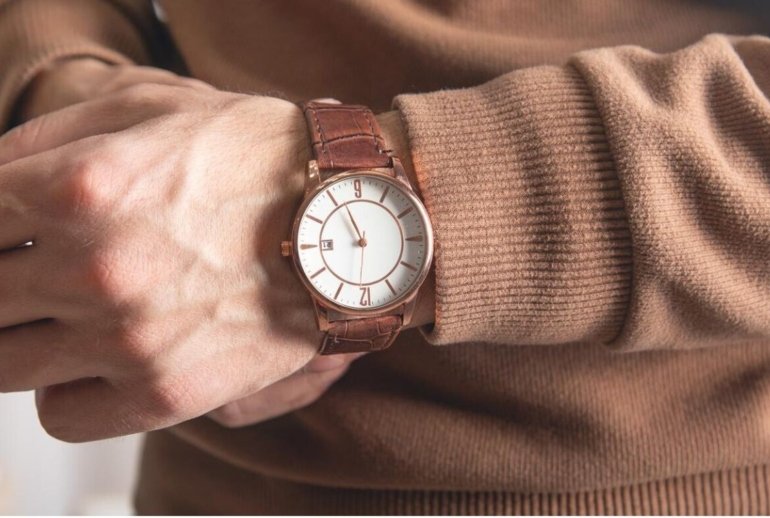
What Is Watch Flipping and Can You Really Make Money at It?
There’s a moment every watch enthusiast knows. You’re scrolling through a marketplace listing at midnight, you spot a Rolex Datejust priced a few hundred below what you know it’s worth, and something clicks. Not just the buy button — something in your brain. That’s a flip.
Watch flipping has quietly become one of the most talked-about corners of the collector world, sitting at that strange crossroads where passion and profit actually coexist. It’s pulled in everyone from seasoned collectors looking to fund the next piece to total newcomers who heard someone made serious money reselling a Submariner and want a cut.
But like most things that sound simple on paper — buy low, sell high — it’s messier than that. Watch flipping rewards knowledge, patience, and a healthy respect for risk. It punishes guesswork, impatience, and overconfidence in roughly equal measure.
So what exactly is it, how does it work, and can you actually make money doing it?
What is watch flipping?
At its most basic, watch flipping is buying a watch at one price and reselling it at a higher price. The gap between what you pay and what you sell for — minus costs — is your margin.
Simple enough. But “flipping” covers a wide range of activity.
On one end, there’s the casual flipper. Someone who picks up a pre-owned Omega Seamaster at an estate sale, cleans it up, lists it online, and walks away with a few hundred dollars more than they spent. Opportunistic, informal, usually tied to an existing love of watches rather than any structured plan.
On the other end, there are serious resellers who treat watch flipping as a full business. They source inventory systematically, track prices daily, maintain relationships with dealers and auction houses, and move multiple watches per month with margins accounted for upfront.
Both count as watch flipping. The difference is volume, strategy, and intent.
What it’s not is the same as collecting. A collector buys a watch to own it, wear it, hold it — often indefinitely. A flipper buys to sell. Those motivations can overlap (plenty of flippers are collectors first), but the distinction matters when you’re deciding whether a purchase makes sense.
It’s also distinct from trading, where watches are the currency rather than cash. Flipping always prioritizes profit.
How watch flipping actually works
Successful flips follow a recognizable pattern, even if no two are identical.
Sourcing is where the real work happens — and where most of the competitive edge is won or lost. Flippers source from online marketplaces like Chrono24, eBay, and WatchBox; auction houses like Phillips, Sotheby’s, and Antiquorum; local dealers and pawnbrokers; estate sales; and private collectors who want to move something quickly and quietly.
The goal is to find a watch priced below its current market value. That gap exists because the seller needs fast cash, doesn’t know what they have, or simply hasn’t done the homework. It’s not about exploiting anyone — it’s about doing your homework well enough to spot value when others have missed it.
Evaluation comes next. Before committing, a serious flipper looks at condition, authenticity, and demand.
Condition matters more than people expect. Original parts, unpolished cases, intact dials, working movements — these command real premiums. A watch that’s been over-serviced, refinished, or fitted with replacement components will almost always disappoint at resale.
Authenticity is non-negotiable. Buying a fake — even accidentally — isn’t just a financial hit. It creates legal and reputational exposure if you pass it on without knowing. Box, papers, serial numbers, physical inspection: all of it is part of due diligence.
If you need a refresher on how to spot a fake luxury watch, it is worth reviewing before you buy.
Demand separates a solid flip from a watch that sits unsold for three months. Knowing which references are moving, which are cooling off, and which have real staying power requires ongoing attention to the market. There’s no shortcut here.
Pricing and listing. Once the watch is in hand, you research comparable sales to land on a realistic asking price — one that attracts buyers without gutting your margin. Strong photography, accurate descriptions, and honest condition reporting aren’t optional. Credibility in this space accumulates over time and can evaporate fast.
The sale. Secure payment, proper packaging, clear documentation, smooth communication. A professional transaction builds the kind of reputation that generates repeat buyers and referrals — which matters a lot if you’re doing this with any regularity.
The watches most commonly flipped for profit
Not every watch is worth flipping. Liquidity — how easily you can move something at a fair price — varies enormously by brand, model, and category.
Rolex is the benchmark. The Submariner, GMT-Master II, Daytona, and Datejust have consistent global demand, deep collector communities, and relatively predictable pricing. They’re not always easy to source below market — everyone knows they hold value — but when the opportunity appears, they’re among the safer flips available.
Patek Philippe is the upper tier: rarer, more expensive, higher risk, but capable of serious margins on the right references. The Nautilus and Aquanaut have both seen dramatic appreciation over the past several years.
Omega works well for flippers with tighter budgets. Vintage Seamasters and Speedmasters — particularly those with original dials and matching case backs — can be sourced at accessible prices and sold to a large, enthusiastic collector base.
If you’re new to the category, it can help to understand the best materials for men’s watch bands, since strap and bracelet choices can affect both value and resale appeal.
Tudor, Zenith, and IWC have all built stronger secondary-market communities over the past five years, opening up more flipping opportunities than before.
Vintage pieces are worth paying close attention to. A watch with historical significance, a rare configuration, or strong provenance can sell for far more than its physical condition alone would suggest. Vintage Rolex Explorers and Paul Newman Daytonas are the obvious examples — pieces that once changed hands for a few hundred dollars and now trade for hundreds of thousands of dollars.
Limited editions and discontinued references can spike sharply when demand outpaces supply. Pop culture plays a role here, too. A watch worn by the right celebrity or featured in a major film can move fast, which cuts both ways, depending on whether you’re ahead of or behind the moment.
The real costs and risks
This is where the conversation needs to get honest, because most writing about watch flipping dwells on the upside.
Overpaying is the most common mistake. When you’re excited about a watch — or feeling pressure to close quickly — it’s easy to go past what the numbers actually support. Every dollar you overpay at acquisition is a dollar your margin has to claw back before you’ve made a cent.
Buying fakes is a genuine risk. The counterfeit market has gotten sophisticated, particularly for high-demand Rolex references. If you’re not yet confident in your ability to authenticate physically, budget for professional authentication before you buy — not after.
Fees are real costs, not footnotes. eBay, Chrono24, and similar platforms charge selling fees. Add payment processing, shipping insurance, and packaging, and a flip that looked profitable on paper can look considerably thinner once the actual cost stack is in front of you.
The market moves. Watches aren’t immune to broader economic sentiment. References that commanded significant premiums in 2021 and 2022 have softened in some cases. Buying based on what prices were doing eighteen months ago and hoping that holds isn’t a strategy — it’s a bet.
Liquidity isn’t guaranteed. Some watches sit for weeks or months. Capital tied up in inventory that isn’t moving is capital doing nothing for you. Accurately predicting how long a watch will take to sell is a skill that takes time to develop, and the learning curve can be costly.
Box and papers matter more than most beginners expect. Original packaging and certificates can add 10–30% to resale value on certain references. A watch without its full set is harder to move and usually sells for noticeably less — factor that in before you buy, not after.
The collectors who do this well aren’t relying on gut instinct. They’ve built pattern recognition through hundreds of transactions, including plenty that cost them money before they started making any.
Can you actually make money at this?
Yes. And also, it depends entirely on what you bring to it.
Some people earn a solid side income moving a handful of watches per month. Others have built full-time dealerships on the back of deep market knowledge and strong sourcing networks. Neither outcome is unusual. Neither is automatic.
The flippers who consistently profit tend to share a few things. They know the market well — not just the flagship references, but the nuances: which dial variants command premiums, which service histories add value, which production years collectors care about. That knowledge doesn’t come from reading. It comes from time in the market.
They also buy with discipline. Profitable flippers don’t fall in love with watches. They walk away from deals that don’t add up, even when the piece is personally appealing. Emotional buying is one of the fastest ways to lose money here.
And they’ve built relationships. Access to good inventory is the single biggest differentiator in this space. Private deals sourced through trusted contacts consistently offer better margins than publicly listed watches, whose prices have already been stress-tested by a hundred other buyers. Those relationships take time, but they’re worth more than any sourcing trick.
As a side hustle, realistic monthly income varies from a few hundred to a few thousand dollars, depending on your working capital and sourcing quality. As a full business, the ceiling is higher — but so is everything required to get there.
The people who treat this casually and buy on impulse tend to break even at best. The people who study the market and treat each flip like a business decision tend to come out ahead.
Is watch flipping right for you?
I’ll be direct: watch flipping is one of the few areas where genuine enthusiasm for the subject gives you a real edge. Knowing these objects well — their history, their mechanics, the nuances collectors care about — isn’t just satisfying. It’s actually useful. Most hobbies don’t pay you back like that.
But it’s a real financial activity with real downside. Going in without preparation is an expensive way to find that out.
The good news is that the preparation is often enjoyable if you love watches. Studying references, tracking prices, attending auctions, handling pieces in person — this is the same work you’d be doing anyway as a serious collector. You’re essentially building knowledge that pays dividends in two directions.
If you’re thinking about getting into this, start with one watch you know well, in a price range where a loss won’t leave a mark. Walk through the entire process. See what sourcing actually looks like in practice. See what selling feels like. Find out where your knowledge holds and where the gaps are. Let that first flip teach you what no article can fully cover.
Then come back here. Over the coming months, we’re going deeper on all of it: how to maintain and clean your favorite watch, authentication, sourcing strategies, which platforms are actually worth using, which references deserve attention right now, and the mistakes that catch even experienced flippers off guard.
There’s a lot to get into.