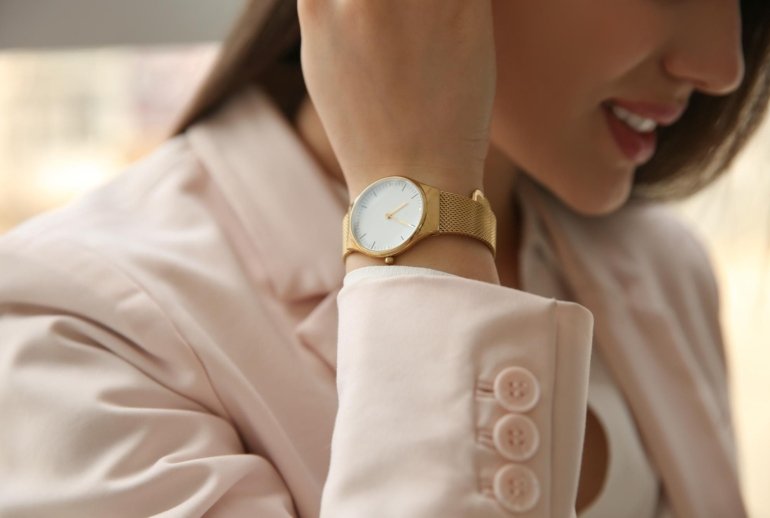
The shower dilemma every watch owner knows
Most watch owners have had this moment. You’re about to step into the shower, you glance at your wrist, and you hesitate — Do I actually need to take this off? Can I shower with an automatic watch? It takes two seconds to remove. It takes considerably longer to explain to a watchmaker why there’s condensation under the crystal of your automatic.
It’s one of the most common questions I get from readers and, genuinely, one of the most misunderstood areas of watch care. The short answer: it depends entirely on the watch you’re wearing. The longer answer — which is the one actually worth knowing — turns on your specific watch type, its water resistance rating, how old those seals are, and what your shower looks like.
This guide breaks it down by category, so you know exactly where your watch stands before you lather up.
Let’s get into it.
Understanding water resistance ratings
Before we talk about specific watch types, we need to clarify what water resistance ratings actually mean — because the industry has done a remarkably poor job of communicating this to ordinary people.
ATM, bar, and meters are all used to express water resistance and often appear interchangeably. One ATM equals roughly one bar of pressure, approximately what you’d experience at 10 meters underwater. A watch rated to 3 ATM is theoretically protected to 30 meters, 5 ATM to 50, and so on.
Here’s where it gets important: these ratings are tested under static, laboratory conditions using cold, still water. They are not a real-world guarantee.
What the numbers mean in practice:
- 3 ATM (30m): Splash resistant. Rain, hand washing. Nothing more.
- 5 ATM (50m): Handles brief submersion and light swimming, but not sustained water activity.
- 10 ATM (100m): Swimming, snorkeling, most surface water activities.
- 20 ATM (200m): Serious diving and sustained water exposure.
Now here’s the part that trips most people up: “water resistant” does not mean waterproof. A watch rated to 5 ATM is not built to be submerged to 50 meters. It’s rated to survive that pressure under ideal test conditions. Your shower is not ideal test conditions.
Your shower hits a watch with multiple threats simultaneously: steam, heat, soap, and pressure fluctuations. Steam is particularly nasty — water vapor can get through gaskets that liquid water can’t. Heat causes metal components to expand and contract at different rates. Soaps and shampoos are chemically aggressive toward rubber seals. It’s genuinely more hostile than it sounds.
And here’s the part that often gets missed entirely: seals and gaskets degrade over time. A watch perfectly sealed to 10 ATM when it left the factory five years ago may not offer that same protection today. Rubber dries out, compresses, and cracks. Which is why professional pressure testing every year or two matters — more on that later.

Can you shower with an automatic watch?
This is the question that prompted the whole article, so let’s give it the space it deserves.
An automatic (or self-winding mechanical) watch is powered by your wrist movement. A rotor inside the movement spins as you move, winding the mainspring. No battery — just hundreds of small mechanical parts working together. It’s impressive engineering. It’s also, if I’m being honest, a bit fragile.
Most automatics — including many popular mid-range and luxury models — carry ratings between 3 and 10 ATM. Some dress watches sit as low as 3 ATM. Certain sports automatics go higher, but that’s the exception, not the rule, unless the watch was specifically built for water use. If you’re unsure how the movement itself works, it helps to understand the different types of watch movements.
The actual risks of showering with one:
Steam exposure is the biggest. Steam particles are smaller than water droplets — small enough to infiltrate gaskets that hold up fine against liquid water. Once moisture enters the case, it can cause fogging and corrosion that quietly damage the movement until something goes visibly wrong.
Thermal expansion is something most people never think about. Hot showers make metal components — case, crystal bezel, crown — expand at slightly different rates. Repeated exposure puts stress on the seals. Not catastrophically, all at once, but gradually, in ways that compound.
Lubricant damage is real and often invisible. Automatic movements need precise lubrication across dozens of components. Moisture can break down those lubricants, leading to friction, wear, and eventually accuracy problems or worse.
Then there’s the crown — the most vulnerable point of entry on almost any watch. Unless it’s a screw-down crown and you’ve actually screwed it down, it’s a gap. Even with a proper screw-down crown, regular exposure to the shower puts repeated stress on that seal.
The bottom line: avoid showering with most automatic watches. Even if yours is rated to 5 ATM, the combination of heat, steam, and soap poses a risk that’s not worth taking for something you can easily avoid. If your automatic is rated to 10 ATM or higher and has been professionally pressure-tested within the past year or two, the occasional shower is unlikely to cause damage — but I still wouldn’t make it a daily routine.
When in doubt, take it off. A watch hook near the bathroom sink costs almost nothing.
Other watch types: quartz, smartwatches, and dive watches
Not everyone reading this wears an automatic, so let’s cover the other major categories.
Quartz watches
Quartz watches use a battery-powered oscillator to keep time and are mechanically simpler than automatics. They’re often cheaper, too, which creates a false sense that “it doesn’t matter as much” — but the water-resistance concerns are essentially the same.
A quartz watch rated to 3 ATM has the same limitations as an automatic watch rated to 3 ATM. Steam, soap, and heat degrade its seals just as readily. Budget quartz watches often have thinner gaskets and less robust case construction, which can actually make them more vulnerable. Don’t assume a cheaper watch means a more replaceable situation.
Smartwatches
Smartwatches are their own thing because they use IP ratings rather than ATM ratings — or sometimes both. An IP67 or IP68 rating means a device has been tested against dust and water intrusion under specific conditions, but these don’t map directly onto ATM standards.
The extra complication is the speaker grilles, microphone ports, and charging contacts — all potential entry points for water. Many modern smartwatches handle shower exposure reasonably well, and some (like the Apple Watch Ultra) are explicitly rated for it. But soap and shampoo residue can clog speaker ports and degrade seals over time. If you shower with yours regularly, rinse it with fresh water afterward.
Dress watches and fashion watches
The category to be most careful with. Dress watches — slim, elegant pieces built for formal wear — typically carry the lowest water resistance ratings of any category, often 3 ATM or less. Fashion watches from non-specialist brands often offer minimal protection, regardless of what the marketing suggests.
Don’t shower with dress watches. Don’t swim with them. They’re built for boardrooms, not bathrooms.
Dive watches
Dive watches are built for water. A proper ISO-rated dive watch starts at 20 ATM (200 meters) and is designed to handle sustained submersion, pressure changes, and everything that goes with serious underwater activity. Your morning shower is a non-event by comparison. For a deeper look at why these watches are built this way, see the history of the dive watch.
That said, soap and shampoo residue can still build up around the bezel and crown, and steam is still steam. A rinse after showering is good practice, even with a dive watch, and keeping the screw-down crown properly secured before water contact still matters.
Sport and field watches
These vary a lot. Some sport watches are genuinely built for water; others look like they are but aren’t. The word “sport” on a dial doesn’t guarantee anything. Check the manufacturer’s specs for your specific model before assuming anything.
What actually happens when you shower with a watch too often
Say you’ve been doing it for months without thinking much about it. Here’s what’s happening inside that case.
Steam penetrates gaskets over time. Even well-sealed watches can experience vapor infiltration with repeated exposure. The first sign is usually fogging on the underside of the crystal — that faint cloudiness that appears and disappears with temperature changes. It looks minor. It isn’t. Moisture inside a mechanical movement invites corrosion.
Soaps, shampoos, and conditioners work on rubber seals. The compounds in these products — detergents, fragrances, silicones — can cause gaskets to swell, harden, or crack. A gasket that’s been regularly exposed to soap is aging faster than it should, and you won’t find out until something goes wrong.
Heat cycles cause cumulative stress. A hot shower expands the metal case slightly. Cool-down contracts it. The gaskets within those tolerances are compressed and released repeatedly. Over time, that cycling degrades the seal.
Signs of water damage to watch for:
- Fogging or condensation under the crystal
- Erratic timekeeping — running noticeably fast or slow
- Corrosion on the case back or around the crown
- A stiff or sticky crown
- In serious cases, visible rust or discoloration on the dial
One thing worth knowing that people often miss: frequent exposure to showers can void your manufacturer’s warranty. Most warranties cover defects in materials and workmanship — not damage from repeated exposure beyond the watch’s specifications. If it gets damaged in the shower, you may have to pay for the repair yourself.
Caring for your watch after water exposure
Accidents happen. You forgot, or you didn’t think. Here’s what to do.
If you accidentally showered with a non-water-resistant watch
Move quickly. Don’t press any buttons or move the crown — this can draw moisture further into the movement. Get it to a qualified watchmaker as soon as possible. Fogging on the crystal confirms moisture has entered. The sooner it’s opened and dried professionally, the better your odds of avoiding lasting damage.
After shower exposure with a water-resistant watch
If your watch is genuinely rated for the exposure, a rinse with lukewarm fresh water after contact with soap or shampoo is good practice. Pat dry with a soft cloth and let it air dry before putting it away. For dive or sport watches that regularly see water, this should just become routine.
Get it tested
Have your watch professionally pressure-tested every one to two years. Most watchmakers and authorized service centers offer this, and it’s not expensive. It catches failing seals before they actually fail. If you regularly wear your watch near water, this isn’t optional. It also complements broader watch care and maintenance habits.
The crown is the most important thing
Before any water contact, make sure the crown is fully pushed in or fully screwed down. This is the single most effective thing you can do. A pulled-out crown — even slightly — makes your water resistance rating essentially meaningless.
When something seems wrong
Fogging, erratic timekeeping, a stiff crown, visible corrosion — take the watch to a professional immediately. Don’t wait for the next scheduled service. Water damage inside a movement progresses quickly. The sooner it’s addressed, the cheaper and simpler the repair.
Know your watch
Here’s the actual short version: your watch type and water resistance rating determine whether showering with it is fine, risky, or a bad idea you’ll regret when you open your wallet.
Automatics deserve the most caution. The mechanical complexity — gears, springs, lubricants — makes them more vulnerable to moisture than their ratings might suggest, and the damage is the kind that builds quietly until it isn’t quiet anymore.
For any watch: know the rating, check the manufacturer’s guidance, and if there’s any doubt — whether because you can’t find a clear answer or because the watch is old enough that the seals might not be performing to spec — just take it off.
A hook by the bathroom sink. Two seconds. Easy habit.
Have a question about your specific watch and water resistance? Drop it in the comments — happy to help you figure out where your model stands.