


This post contains affiliate links. As an Amazon Associate, I earn from qualifying purchases. This means I may earn a small commission if you purchase through my links at no extra cost to you.
| Image | Product | Category | Amazon Link |
|---|---|---|---|
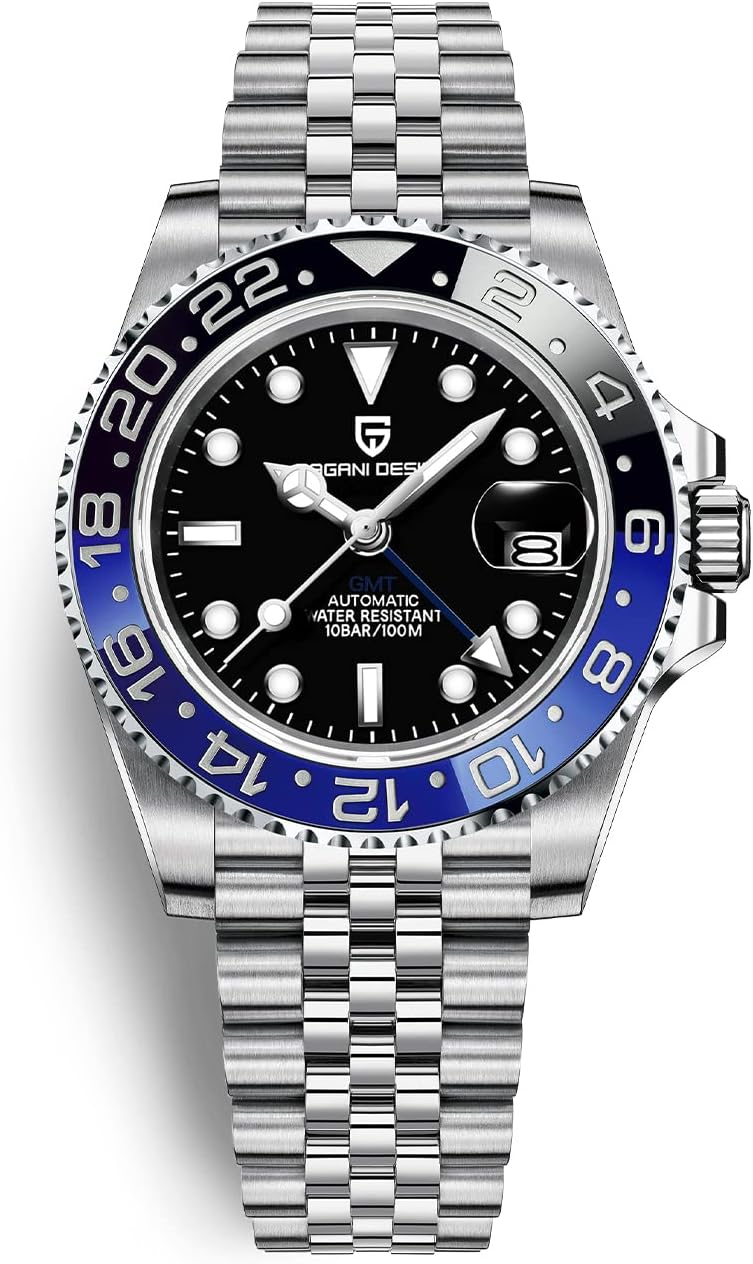 | GMT-Master II | Best Overall | Check Price |
 | Oyster Perpetual | Best Value | Check Price |
 | Aquanaut | Best Luxury Pick | Check Price |
 | Chrono24 | Best Marketplace | Check Price |
 | WatchBox | Best Pre-Owned Option | Check Price |
Why resale value matters now
Which watch brands hold value best? Rolex, Patek Philippe, and Audemars Piguet hold value best overall, with core steel sports models often reselling at or above retail. Tudor is the strongest mid-market option, while Omega and high-end Seiko can also retain value well in the right references. Condition, originality, and box and papers matter as much as the brand itself.
There's a version of this conversation that happens in watch shops, collector forums, and auction preview rooms around the world — usually starting with some variation of: "I heard these hold their value really well."
Sometimes that's true. Sometimes it's wishful thinking in a nice box.
In 2025, with the secondary market more data-rich and more volatile than it's ever been, the difference between those two things is worth real money.
The resale market has matured a lot over the past several years. Platforms like Chrono24, WatchBox, and Subdial now publish pricing data that would have taken serious research to compile even a decade ago. Auction houses have gone digital. Private sales are tracked. The post-pandemic speculation era — when certain references were trading at three times retail and buyers were camping outside boutiques — has given way to something more complicated and more interesting.
Which watch brands hold their value in 2025 isn't just a collector question. It's relevant to anyone spending serious money on a watch, anyone thinking about flipping, and anyone who wants to make sure their next purchase doesn't depreciate like a car off a lot.
The methodology: how we measured value retention
"Holds value" gets thrown around with very little precision, so a word on how this works before the rankings.
Value retention here means the percentage of original retail price a watch commands in the pre-owned market after one to five years of ownership, average condition, without box and papers, across multiple sales data points rather than one-off outliers. I cross-referenced Chrono24's publicly available pricing trends, WatchBox's resale reports, Subdial's transparency index, and completed auction results from Phillips, Christie's, and Sotheby's.
A few caveats worth taking seriously:
Condition matters enormously. Mint condition with full box and papers will consistently beat these averages. An over-polished case or replaced dial will consistently fall short.
Reference-level variation is real. Within any brand, some models dramatically outperform others. One iconic reference can prop up a brand's average while a dozen forgettable ones drag behind it. I'll call those out where they matter.
The market has cooled from its 2021–2022 peak. Some references that commanded extraordinary premiums have corrected. These are 2024–2025 numbers, not bubble-era prices.
"Holds value" and "appreciates in value" are different things. A watch that retains 85% of retail after five years is genuinely impressive. A watch trading at 150% of retail is in a different category — and a riskier one to count on.
Tier 1: brands that consistently hold or gain value
Rolex
No other starting point makes sense. No other mainstream watch brand comes close to Rolex's combination of consistent demand, global recognition, and secondary market performance.
Across its core sports references — the Submariner, GMT-Master II, Daytona, and Explorer II — Rolex watches routinely trade at or above retail, assuming you can source them at retail to begin with. The stainless steel Daytona remains one of the most reliable value retention stories in the entire market, sitting at 140–180% of retail in 2025. The "Pepsi" and "Batman" GMT-Master II have stabilized from their 2021 peaks but remain firmly above retail.
Even the more accessible references — the Datejust, the Oyster Perpetual — tend to hold 85–95% of retail after several years of regular wear. That's remarkable for a watch being worn daily.
What drives it: production discipline, a selective dealer network, and brand legibility that's genuinely global. When someone in Tokyo, São Paulo, or Dubai wants a safe-haven watch purchase, Rolex is where they look first. That demand doesn't disappear.
Average retention across key references: 95–160% of retail
Patek Philippe
If Rolex is the benchmark, Patek is the exception to almost every rule. Its watches don't just hold value — they routinely appreciate, sometimes dramatically, particularly for complications and limited references.
The Nautilus 5711 is the obvious example. When Patek discontinued it in 2021, secondary market prices became almost academic — examples trading at three and four times retail within months. Even as the broader market has cooled, the 5711 holds extraordinary premiums.
Beyond the Nautilus, the Calatrava, Aquanaut, and Grand Complications all show strong retention. The brand's "you never truly own a Patek Philippe" marketing line is shameless. The secondary market keeps validating it anyway.
What drives it: genuinely constrained production, real mechanical prestige, a collector community that treats ownership as identity, and a long track record of auction records that self-reinforces.
Average retention across key references: 110–200%+ of retail for sport and complication references
Audemars Piguet
The Royal Oak is one of the defining design stories in watchmaking, and the secondary market has reflected that for years. The stainless steel Royal Oak — particularly the 15202 "Jumbo" and 15500 references — consistently commands premiums above retail, often in the 120–160% range.
Like Rolex and Patek, AP benefits from controlled distribution and a brand narrative that resonates deeply with collectors. The Royal Oak Offshore is more variable depending on the reference, but the core Royal Oak is one of the strongest performers in the market.
Average retention across key references: 100–160% of retail for core Royal Oak references
Tier 2: strong performers with solid resale returns
Omega
Omega is where things get more interesting for most buyers. The watches don't reliably trade above retail, but they hold value better than the price points suggest — and there's genuine upside if you know which references to target.
The Speedmaster Professional Moonwatch is the standout. As one of the most historically significant watches ever made, it holds value with unusual consistency — typically 75–90% of retail in normal condition, and considerably more for original-dial vintage examples or limited editions tied to meaningful anniversaries. Vintage Seamasters — particularly CK2913 and early 300M references — have appreciated as collectors recognized their significance.
Where Omega loses ground is in its fashion-adjacent pieces, which depreciate more like fashion products than watches. The movement credibility doesn't transfer to every reference in the catalog.
Average retention across key references: 70–90% of retail
Richard Mille
Richard Mille occupies an odd position in this analysis. Its prices are extraordinary — many references start at six figures — and its secondary market can be genuinely volatile. But core references like the RM 011 and RM 035 have shown strong retention, with a buyer pool that isn't especially price-sensitive. The brand's association with elite sport and aggressive material innovation creates a different kind of desirability — one that holds up for the right references, even if the overall picture is more variable than Tier 1.
Average retention across key references: 90–130% of retail for core sport references
Tudor
Tudor has done something relatively rare: built genuine secondary market credibility on its own terms. The Black Bay — particularly early versions and the Black Bay 58 — retails at accessible prices and holds value at a rate that surprises people expecting entry-level positioning.
The Black Bay Pro, the Pelagos, and vintage Monte Carlo chronograph references have all shown strong resale performance. Tudor's value proposition in 2025 is one of the better stories going. If you're weighing whether a model like the Black Bay 58 is a smart buy, resale data says yes more often than not.
Average retention across key references: 80–95% of retail
Tier 3: mid-range brands that surprise (and disappoint)
IWC
Genuine prestige, real military heritage on the pilot's watches, and the Big Pilot is one of the most recognizable designs in modern watchmaking. But the secondary market performance is more uneven than the retail prices suggest. The Big Pilot holds reasonably well (65–80% of retail), but many of IWC's fashion-forward pieces depreciate faster than collectors expect. Strong buy, average hold.
TAG Heuer
TAG sells a lot of watches. That volume, combined with frequent marketing partnerships and model proliferation, tends to weaken secondary market performance. The Monaco retains collector interest and holds better than most TAG references, but across the catalog, 50–70% retention is a realistic expectation. Not terrible. Not enough to buy as an investment.
Breitling
The Navitimer has genuine aviation heritage and a devoted following — it performs better than average for the brand. But Breitling's secondary market overall tends toward 55–75%, and the brand's repositioning under current ownership has created real pricing volatility. Similar story to TAG, with the added complication of an identity that's still mid-recalibration.
Seiko (high-end)
Context-dependent. Entry-level Seiko performs about as expected. But high-end Seiko — particularly Grand Seiko Spring Drive references and vintage dive watches from the 1960s–80s — has appreciated meaningfully over the past five years. The Grand Seiko SBGA211 Snowflake has become a legitimate collector's piece. If you know Seiko well enough to buy the right references, the upside is real.
Cartier
Cartier watches regularly disappoint buyers who expected investment-grade performance. The Santos, Tank, and Ballon Bleu are beautiful objects, but secondary market retention typically lands in the 50–65% range unless you're looking at rare variants or vintage pieces with strong provenance. Buy Cartier because you love it. Don't buy it expecting the market to reward you.
The factors that actually determine whether a watch holds its value
The brands matter, but the factors behind brand performance matter more. Understanding these separates buyers who consistently make good decisions from those who find themselves surprised by a low resale offer three years later.
1. Production volume Scarcity drives premium pricing. Rolex, Patek Philippe, and AP all deliberately constrain production relative to demand. When you can't walk into a boutique and buy something, the secondary market price reflects that. High-volume brands that flood the market struggle to sustain premiums.
2. Reference longevity and discontinuation Watches that stay in production for decades establish reference points that make them legible to buyers worldwide. When a reference is discontinued — as Rolex did with the GMT-Master II 116710LN and the Submariner 116610 — secondary market prices typically rise. The SKX007 situation with Seiko is a clear example at a more accessible price point.
3. Original condition Over-polishing a watch is one of the most financially destructive things you can do to it. Collectors pay for honest wear on original surfaces, not the bright gleam of a watch that's been through an overaggressive service. Replaced dials, non-original crowns, and aftermarket bracelets suppress value more than most sellers anticipate.
4. Box and papers The full-set premium is real and consistent. On many references, original box and papers add 10–25% to resale value. Keep everything. Store it properly. For more on that, see How to Store Watches Properly Without a Watch Box.
5. Cultural relevance Watches that have accumulated genuine cultural meaning — through film, sport, historical association, or real celebrity connection — outperform those that are technically excellent but narratively blank. The Speedmaster's moon landing history. The Royal Oak's disruption of the watch industry in 1972. The Submariner's Bond decades. These stories aren't marketing filler — they're drivers of sustained demand.
6. Mechanical credibility In-house movements command premiums. Movements with genuine technical achievement — co-axial escapements, silicon hairsprings, spring drive technology — sustain collector interest better than commodity movements regardless of the case surrounding them.
Practical guide: which models to buy, hold, and sell
Buy:
- Rolex Datejust in steel on Oyster bracelet, sourced without box and papers at a genuine discount to market. Clean up the presentation, list it properly, and the margin is reliable.
- Tudor Black Bay 58, particularly earlier references in excellent unpolished condition. The collector base is growing and pricing is still accessible relative to where it'll likely land in five years.
- Grand Seiko Spring Drive references from sellers who don't understand what they have. This happens more than you'd expect on regional auction platforms.
- Vintage Omega Seamaster references from the 1960s, particularly CK2913 variants with original dials. The authentication work is demanding. The reward is real. If you're unsure how to assess them, Tips for Finding Authentic Luxury Watches Online can help you avoid costly mistakes.
Hold:
- Any Rolex sports reference in steel bought at or below retail. The case for holding is stronger than the case for flipping quickly unless you need the liquidity.
- Patek Philippe Aquanaut in steel. Premiums remain, and the long-term trajectory has been consistently upward.
- Tudor Pelagos FXD. Military-inspired, limited production relative to demand, and building real collector credibility.
Sell (or don't buy for investment purposes):
- TAG Heuer outside of Monaco. Catalog too broad, volumes too high, secondary market too thin.
- Cartier fashion pieces without rare provenance. Beautiful objects, disappointing resale.
- Anything that spiked on short-term hype without underlying horological merit. Pop culture moments create temporary premiums. Those premiums evaporate.
- Modern Breitling outside of vintage Navitimer references. The brand's repositioning has created genuine pricing uncertainty.
One practical note on flipping economics: the margin calculations need to be honest. Platform fees, shipping, insurance, and time all cost something. A watch that looks like a 20% margin on paper is often closer to 10% after costs — which is still worth doing at scale, but requires accurate accounting at the buy stage. Work backwards from your target profit, not forwards from excitement about the piece. If you're learning the ropes, best watches to flip for beginners under $500 is a useful starting point.
Where the data actually points for long-term value
My grandfather's Seiko wasn't bought as an investment. It was bought as a watch — something that told him where he stood in the world, as he used to put it. The fact that a 1962 Seiko in good condition is now a collectible worth serious money wasn't part of the calculation. It was just a decision made with good judgment and no overthinking.
That's still the best model: buy something you understand, from a brand with genuine credibility, at a fair price, and take care of it. The market rewards that more consistently than speculation.
But if you want specifics from the 2025 data:
Rolex is the most reliable value retention story in watchmaking. Not every reference, not at any price — but the core sports models, bought in original condition and maintained carefully, have held and grown in value over decades in a way no other brand has consistently matched.
Patek Philippe is the most powerful value story for those with the budget. The risk is proportional to the price, access is a genuine challenge, and the long-term appreciation data is unambiguous.
Tudor is the best mid-market play right now. The Black Bay 58 specifically — heritage, design credibility, and accessible pricing that the secondary market hasn't fully caught up to yet.
Vintage Omega is underappreciated for buyers willing to do the authentication work. The cultural significance is real, the collector base is growing, and the pricing hasn't fully reflected either of those facts.
Condition, originality, and documentation are worth more than most buyers realize at purchase — and more than most sellers expect at sale. The fundamentals of this market aren't complicated. They just require patience, knowledge, and the discipline to walk away from a deal that doesn't add up.


